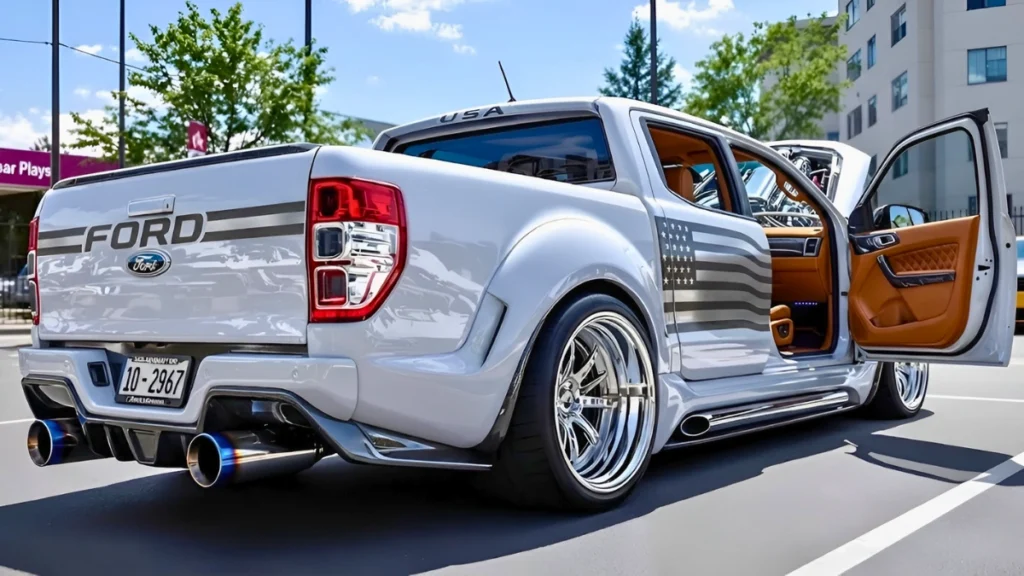
2026 Ford Ranger Hybrid: The midsize truck segment just witnessed a tectonic shift that renders yesterday’s news completely obsolete. Ford has officially stopped tiptoeing around electrification and has dropped the hammer with the 2026 Ranger Plug-In Hybrid (PHEV). This isn’t just a minor refresh or a simple bumper update; it is a fundamental rethinking of what a “ute” or pickup truck can be in the modern era. Enthusiasts and critics alike have been speculating for months about whether the Blue Oval would actually compromise the Ranger’s rugged reputation for the sake of batteries. The answer is a resounding “no,” but the execution is far more aggressive than anyone anticipated.
Torque Monster Eats Raptors
The biggest shock with the 2026 Ranger Hybrid isn’t the fuel economy; it is the absolute brutality of the torque figures. Ford has paired the tried-and-true 2.3-liter EcoBoost turbocharged gasoline engine with a high-density electric motor sandwiched into the transmission. The result is a confirmed torque output of 690 Nm (approx. 509 lb-ft), which remarkably out-muscles the standard Ranger Raptor V6 in pure pulling power. This setup eliminates turbo lag entirely, using the electric motor to fill in the power gaps instantly, meaning when you smash the pedal, the truck launches with a violence that feels decidedly un-hybrid-like.
Silent Assassin In Woods
Off-road enthusiasts usually associate capability with the roar of a diesel engine, but the 2026 Ranger changes that narrative completely. The vehicle offers an impressive electric-only driving range of approximately 45 kilometers (28 miles). This allows for “silent crawling” on trails, where you can navigate technical obstacles without the engine running. This feature is a game-changer for hunters, wildlife photographers, or campers who don’t want to disturb the peace of nature. Creeping through a forest track in absolute silence, hearing only the crunch of tires on gravel, is a new kind of luxury that traditional trucks simply cannot offer.
Generator On Wheels Logic
Perhaps the most practical innovation in this new model is the introduction of Pro Power Onboard. Ford has integrated standard power outlets into the truck bed, fed directly by the hybrid battery system. We aren’t talking about charging a laptop; this system provides 2.3kW of exportable power. You can run heavy-duty power tools like circular saws, air compressors, or even an entire campsite setup including fridges and lights, all without idling a gas engine. It transforms the Ranger from a vehicle that just gets you to the job site into a vital piece of equipment that actually powers the job site.
Facelift Or Face Transplant
Visually, the 2026 model year brings a sharper, more aggressive aesthetic that borrows heavily from its big brother, the F-150. The “face” of the truck has been tightened, featuring a new grille design that integrates specifically with the Matrix LED headlights. The signature C-clamp daytime running lights have been thinned down and modernized, giving the truck a wider, more planted stance. Gone is the excessive chrome of previous generations; the new design language favors “Ebony Gloss” and matte black finishes, creating a “sport-luxury” vibe that looks just as at home valet parking at a hotel as it does covered in mud.
Towing Myths Get Busted
A major fear circulating in online forums was that the added weight of the batteries would kill the Ranger’s towing capacity. Ford engineers clearly took this personally. The 2026 Ranger PHEV retains the full 3,500 kg (7,700 lbs) braked towing capacity of its diesel and gas counterparts. The hybrid system actually enhances the towing experience by using “regenerative braking” to help slow down heavy trailers on steep descents, saving wear and tear on your mechanical brakes. It effectively uses the weight of the trailer to recharge the battery, turning a towing burden into free energy.
Cabin Tech Goes Galactic
Stepping inside the new Ranger feels less like climbing into a work truck and more like entering a command center. The interior is dominated by the standard 12-inch vertical infotainment screen running the latest SYNC 4A software. But the real upgrade is the fully digital 12.4-inch instrument cluster behind the steering wheel, which changes graphics based on your drive mode. Whether you are in “Mud/Ruts” or “EV Now” mode, the screen prioritizes the data you need. The physical materials have also seen a massive upgrade, with soft-touch materials replacing hard plastics on the door cards and dash, elevating the daily driving feel.
Charging Without The Cord
One of the smartest features implemented in the 2026 powertrain is the “EV Charge” drive mode. While this is a Plug-In Hybrid meant to be charged at home, you aren’t stranded if you forget to plug in. You can command the gas engine to act as a generator while you drive on the highway, recharging the battery back to a set level. This means you can burn gas on the fast highway miles to charge up the battery, and then switch to pure electric mode once you hit the city or the trail. It gives the driver complete control over energy management, removing the dreaded “range anxiety.”
The Suspension Weight War
Adding a battery pack and electric motor adds significant weight, usually ruining a truck’s handling, but Ford has retuned the suspension specifically for the PHEV. The rear dampers have been recalibrated to handle the extra mass of the battery pack located between the frame rails. Early test reports suggest this extra weight actually settles the rear end, reducing the “bounciness” unladen pickup trucks are famous for. The center of gravity is lower, making the truck feel more planted in corners. It’s a rare instance where adding weight has arguably improved the on-road driving dynamics rather than ruining them.
America Might Be Waiting
Here is the bitter pill for North American buyers reading this with excitement. Ford has focused the initial launch of the Ranger PHEV on Europe, Australia, and New Zealand—markets where emissions regulations are stricter and fuel prices are higher. While Ford US has not explicitly ruled it out, the existence of the Maverick Hybrid and the F-150 Lightning puts the Ranger PHEV in a weird middle ground for the States. American buyers might see these facelift updates (lights, grille, screens) immediately, but the hybrid powertrain could lag behind by a model year or two, leaving the 2.3L EcoBoost and 2.7L V6 as the primary US options for now.
Toyota Needs To Panic
The arrival of this truck puts serious pressure on the competition, specifically the Toyota Tacoma (and Hilux globally). While Toyota has its own i-Force MAX hybrid system, it is a traditional hybrid, not a plug-in. The Ranger’s ability to drive on electric power alone for meaningful distances creates a distinct advantage that Toyota currently cannot match in this segment. Ford has effectively leapfrogged the competition in terms of versatility. The Ranger is no longer just fighting for second place; it is dictating the terms of engagement for the entire midsize category going forward into the latter half of the decade.
Maintenance Nightmares Or Dreams
Complexity is the enemy of reliability, and skeptics are right to question the long-term durability of such a complex drivetrain. You have a turbo, a gas engine, an electric motor, a high-voltage battery, and a 10-speed transmission all working in unison. However, the flip side is reduced wear on the gas engine during city driving and significantly longer life for brake pads due to regenerative braking. Ford has also simplified the accessory drive belt system since the AC compressor is now electric. While there are more parts to break, the parts that usually wear out fastest are under less stress than in a conventional truck.
Stormtrak Limited Edition
To celebrate the launch, Ford is introducing a “Stormtrak” edition that sits alongside the Wildtrak and Raptor. This trim is exclusive to the PHEV and features unique Chill Grey paint, distinct 18-inch alloy wheels, and flexible rack systems standard. It serves as the launch vehicle for the hybrid technology, packaging every possible option into one bundle. The Stormtrak is designed to visually distinguish the hybrid owners from the rest of the pack, offering specific badging and interior stitching that shouts “premium” rather than “utility.” It targets the lifestyle buyer who wants the truck image without the truck fuel bill.
The Super Duty Shadow
Lurking behind the Hybrid news is the confirmation of a “Ranger Super Duty” for specific global markets. While different from the PHEV, it shows Ford’s commitment to the platform. This heavy-duty variant boasts a massive 4,500 kg towing capacity and a strengthened chassis. Why does this matter for the Hybrid? It proves that the T6 platform the Hybrid sits on is over-engineered. If the chassis is strong enough to handle Super Duty loads, it is more than capable of handling the hybrid battery weight without flexing or cracking over time. It gives peace of mind regarding the structural integrity of the new 2026 models.
Pricing Leaks And Rumors
Innovation carries a price tag, and the 2026 Ranger Hybrid will not be a budget option. Analysts expect a significant price premium over the standard V6 diesel or gas models. You are paying for the battery technology, the electric motor, and the complex management systems. In markets like Australia, pricing is expected to hover near the Raptor territory, positioning the PHEV as a top-tier flagship rather than an economy choice. The “saving money on gas” argument only works if you keep the truck for many years; otherwise, this purchase is about performance and technology, not penny-pinching.
Final Word: 2026 Ford Ranger Hybrid
The 2026 Ford Ranger Hybrid and facelift represent the most mature, capable version of this truck we have ever seen. It bridges the gap between the combustion past and the electric future without forcing owners to give up the utility they actually need. The facelift keeps it looking fresh against stiff competition, and the interior upgrades finally bring it up to par with modern SUVs. While US availability remains the biggest question mark, the hardware itself is a triumph. It’s a truck that can tow a boat, crawl a trail in silence, and power your house during a blackout. That is not just an update; that is a new benchmark.